

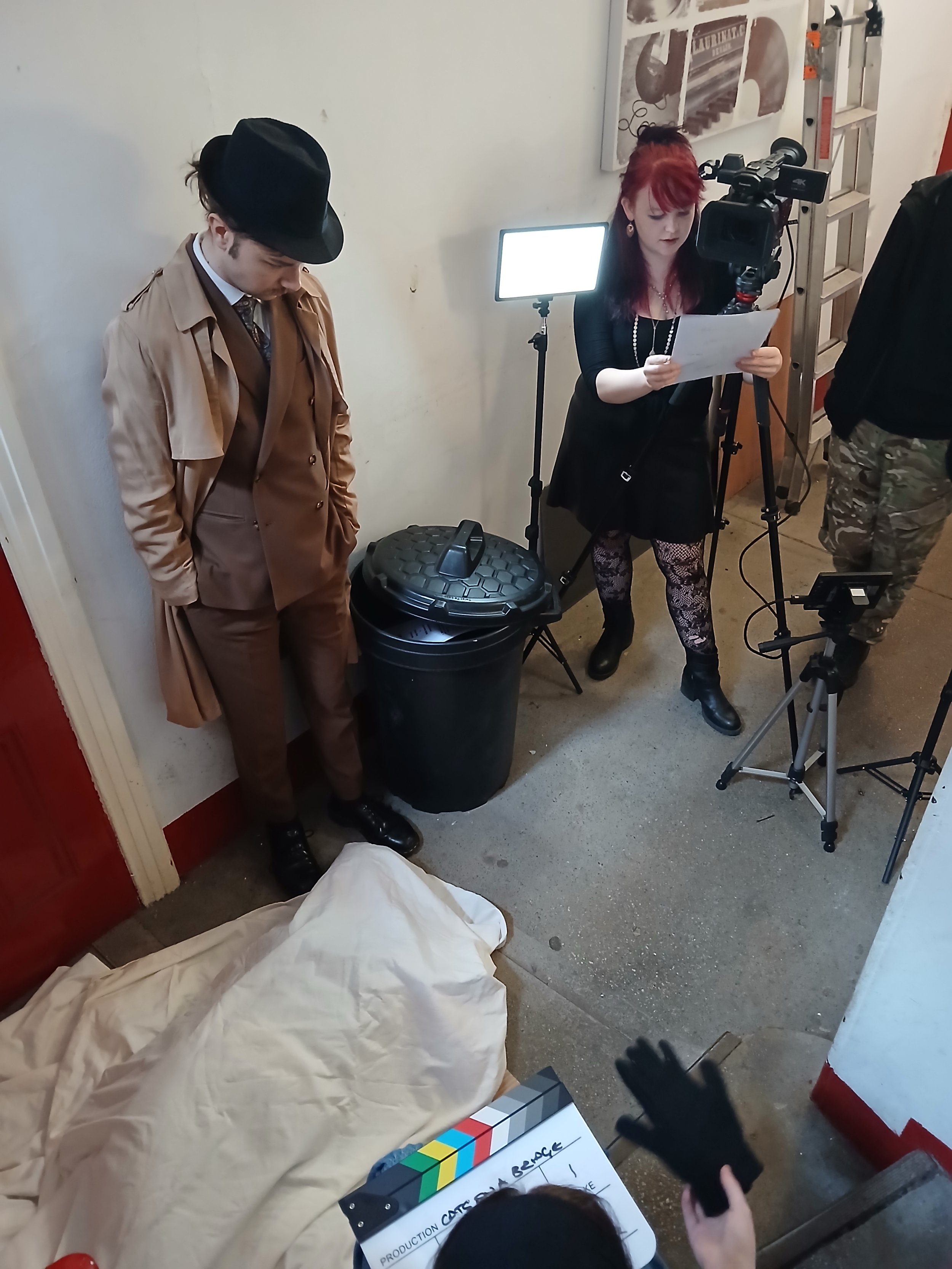
Making your Short Film:
STORY
Plan a simple story with a few location and keep to a small number of characters - two or three work best. Think about their relationship to each other, their situation and some kind of conclusion to the story.
We can help you develop your initial thoughts into a story, and we will help you keep the story visual - film allows you to show something rather than have your characters describe it.
Take a look at short films around you: commercials are a great example in how to tell a story in under 30 seconds. YouTube contains a huge number of short films in all kinds of genres, and you can spend many happy hours watching and learning from everyone else’s short films. Here’s a link to get you started: YouTube shorts
There are also thousands of videos advising you how to make a short film, what mistakes not to make, what kind of shots to use – this is all helpful, but don’t get bogged down. The best way to learn about film making is to make your own film.
SCRIPT
A script for a short film should be about five A4 pages long: a page of a script is about a minute on screen. We’ve planned for four days of shooting for your short film, which should be plenty of time.
There is a recognised format for film scripts, and we can always help you format your script if you find that hard to do. We use Final Draft which is industry standard. If you would like to try scriptwriting software, Story Architect is open source software that is free to beginners: https://starc.app/ A basic Word document is also fine to use.
Here are some useful links to look at scripts:
The Internet Movie Script Database (IMSDb)
For looking up screenwriters and everyone else involved in making film & TV, use IMDb. It is a one stop shop for all kinds of information about films, TV episodes, and short films, including cast, crew and screening/broadcast information. See also the BBC Writers’ Room where there is help and advice for writers including a script library, classes, and commissions for new writing.
Other useful websites include No Film School and StudioBinder
STORY BOARD
This is a way of making a visual guide to the shots in your film, and very useful for planning your shoot. It will help you develop a visual guide to the scenes you want to shoot. Use stick figures or simple diagrams - your story board doesn’t have to be a beautifully drawn art work. Using Post-it notes is also a good way to re-order shots or insert more shots into your scene.
Some examples from YouTube: a simple storyboard
PREP and SHOOT
Your pre-production work includes deciding on locations, getting permission to film, rehearsing your cast, and gathering all the props and costumes you need. We may need to check locations to see if there are any safety issues and we will do a risk assessment on your behalf.
We will help you schedule your shoot in a logical order that makes the best use of your cast and locations. We will also make time for you to practice on our camera and mic so that you have a clear idea of what and how you want to direct.
We will help draw up a production schedule and shooting script, and we help train individuals who are interested in specific production roles: sound, continuity, costume, locations, etc. We want to give everyone involved in this film the experience of what it is like to work in the industry.
We will edit the film, and we are happy to involve anyone who wants to get involved in editing the work. We use Final Cut Pro for our editing.
Remember: you can only use royalty-free music and sound effects to enhance the emotional tone of your film. If you know a local musician or a band, it might be worth asking them to provide a simple music composition for the chance of a credit on your short.